

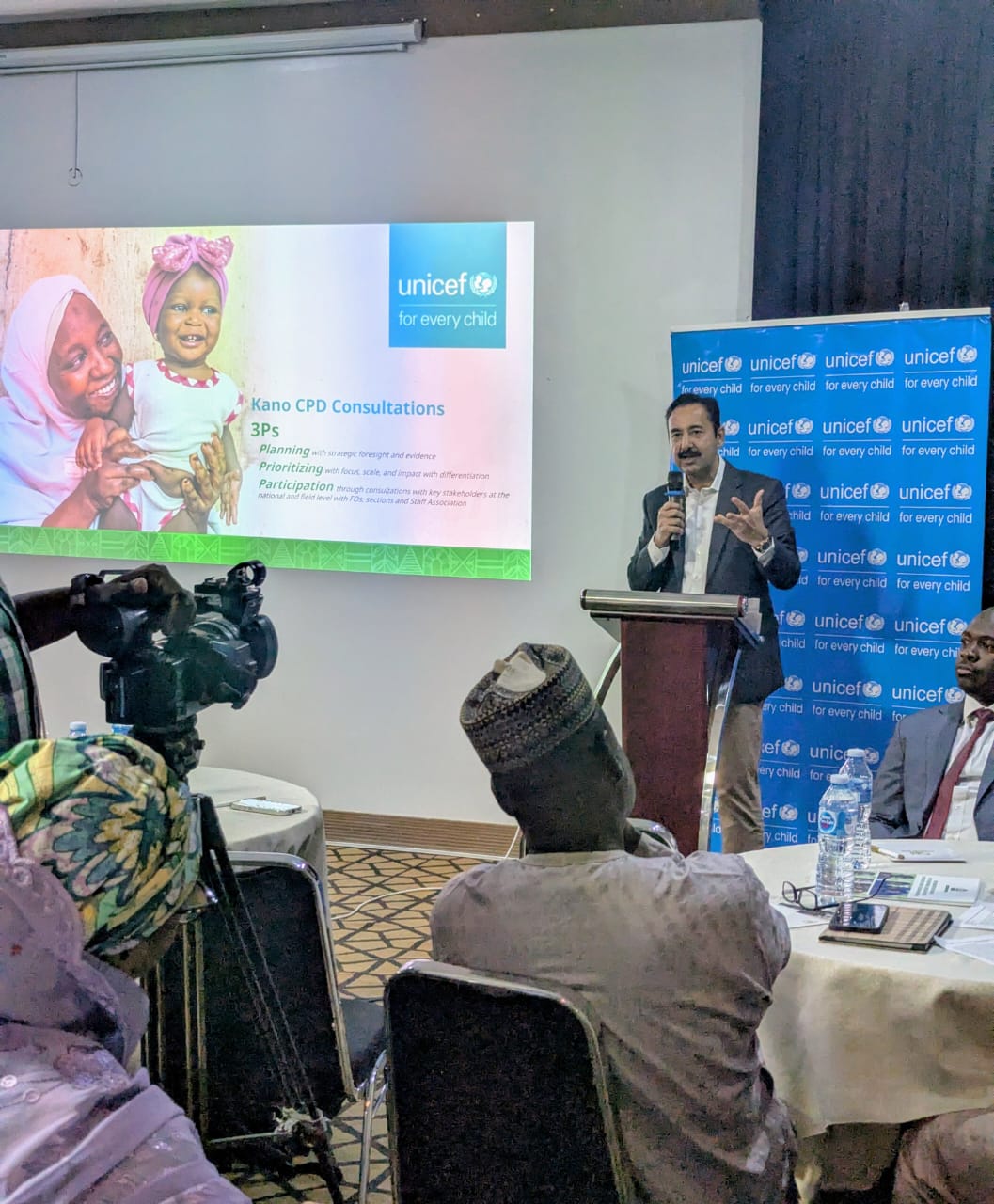
UNICEF Nigeria has launched a pivotal two-day stakeholder consultation in Kano to design its five-year Country Programme Document for 2028–2032, focusing heavily on shifting economic, technological, and climate landscapes.
READ ALSO:UNICEF Urges Renewed Commitment to Tackle Out-of-School Children in Kano
Read also: WAIYA INAUGURATES SIX-WEEK COMPUTER TRAINING PROGRAMME FOR STAFF
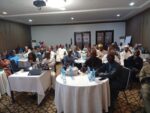
The strategic regional meeting brings together government officials and civil society groups from Kano, Katsina, and Jigawa states. Participants span critical sectors, including health, education, child protection, WASH (Water, Sanitation, and Hygiene), alongside dedicated representation from the disability community.
Speaking at the event, UNICEF Chief of Field Office (Kano), Shafique Rahman, emphasized the urgency of addressing multi-dimensional child poverty amid rapidly evolving social and economic realities.
“This is an important time for us to review critical child deprivation and see how to address them in the coming days,” Rahman stated.
Read also: Alleged Adultery Against Jigawa Commissioner: I Tender Over 1,260 Evidence to Police — Nasiru Buba
“The situation is changing with technological, economic, social, and political shifts.
We are trying to understand this to set the next priorities, so these deprivations are addressed for the children of Nigeria, particularly in Kano, Katsina, and Jigawa.”
Reaffirming the region’s commitment, the Acting Permanent Secretary of the Kano State Ministry of Planning and Budget, Alhaji Abdulmumini Ladan Ajumawa, assured partners that Northwest states are dedicated to boosting investments in child healthcare, nutrition, and education.
READ ALSOUNICEF:KANO RECORDS HIGHEST NUMBER OF ZERO DOSE CHILDREN IN NIGERIA
Read also: 8th edition of National youth games to commence tomorrow
While praising UNICEF’s long-standing partnership, Ajumawa candidly outlined the steep hurdles the region still faces:
“These challenges call for coordinated, multi-sectoral, and people-centered responses,” Ajumawa noted, urging participants to actively align their respective state budgets and development blueprints with sustainable solutions to ensure no child is left behind.
