



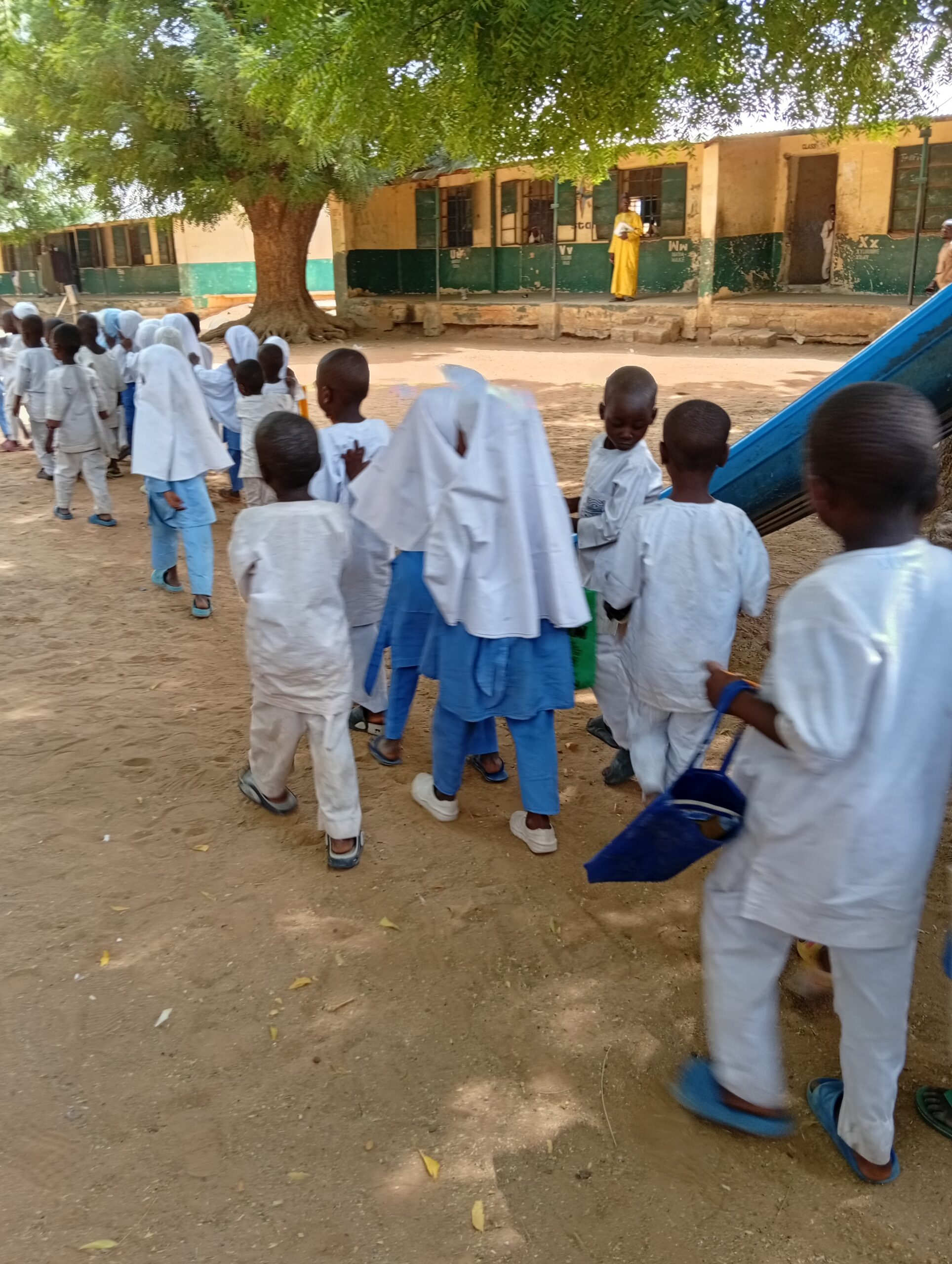
Wife of the Executive Governor of jigawa state, Hajiya Hadiza Umar Namadi, has called for a renewed commitment to Early Childhood Education (ECE), describing it as an indispensable foundation for national development.
Speaking at a Media Dialogue focused on strengthening ECE and quality education across Jigawa Kano, and Katsina States, the First Lady emphasized that the early years of a child’s life are critical for cognitive, emotional, and social growth.
Read also: FCDO SET ASIDE NINETEEN MILLION POUNDS TO STRENGTHEN HEALTH AND EDUCATION IN KANO AND JIGAWA STATES
Addressing a gathering of Educationist, government officials, Media and Unicef officials, Hajiya Hadiza Umar Namadi noted that investing in early education is no longer an option but a necessity for any society aiming for long-term progress.

“Early childhood education remains the foundation upon which every nation builds its future,” she stated.
“Our commitment today determines the quality of our future generations.”
Representative of the wife of the jigawa state Governor Hajia khadija Muhammad In her address, said the media serve as the bridge between government policy and the citizenry, urging them to use their platforms to influence positive behavioral changes regarding school enrollment and child development.
She then commended the partnership between UNICEF and the Jigawa State Ministry of Basic Education, citing it as a model for addressing developmental challenges.
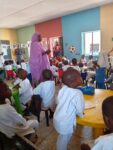
The dialogue serves as a unified platform for Jigawa, Kano and Katsina states to share strategies and improve school readiness across the region.
She urged stakeholders and participants to move beyond discussion and toward “actionable solutions.”
She reiterated the Jigawa State Government’s dedication to supporting programs that ensure no child is left behind.
READ AlSOUNICEF Urges Renewed Commitment to Tackle Out-of-School Children in Kano
In his good will message, Dr. Karanveer Singh, Officer-in-Charge, UNICEF Kano Field Office said Early Childhood Education (ECE) is not merely a social service but the most critical and cost-effective investment a nation can make to secure its economic and developmental future.
A child’s brain develops more rapidly during the first five years than at any other point in life.
Maximizing this window requires a dual approach: play-based learning for children aged 3–5 and robust parenting and nutritional support for infants aged 0–2 years.
Dr. Singh highlighted a stark disparity in ECE enrollment and foundational literacy across the focal states:
Enrollment Statistics: Jigawa (24%), Kano (29%), and Katsina (32%).
In specific corridors, foundational literacy rates drop below 15%, fueling the regional “out-of-school” crisis.
Progress is currently stalled by low parental awareness, a deficit of specialized teachers, crumbling infrastructure, and chronic underfunding.
UNICEF advocates for the institutionalization of ECCDE (Early Childhood Care and Development Education) through dedicated budgetary allocations and the recruitment of professional caregivers.
Journalists are urged to evolve from observers into development partners.
The challenge is to humanize the data turning statistics into compelling narratives that influence policy and reshape public mind-sets.
UNICEF reaffirmed its commitment to strengthening data systems, providing instructional materials, and training educators.
The goal remains a collaborative partnership with the Government, Civil Society and Media to ensure every child possesses the right to thrive.
The UNICEF officer in-charge Mustapha Shehu when interviewed during a recent field assessment highlighted the contrast between standard educational requirements and the reality of Early Childhood Care and Development Education (ECCDE) in local schools, underscoring the vital role of international interventions.
In several schools across the region, the disparity between recommended standards and current conditions is significant
Case Study (A): A unicef intervention school At Yakubu Pilot primary school in Birnin kudu LGA jigawa state, as being monitored by journalists and Government officials per classroom had about 75 pupils which was being managed by three teachers.
In contrast, schools benefiting from UNICEF interventions demonstrated a clear path toward quality education.
UNICEF’s support has provided a blueprint for what a functional learning environment should look like.
While in the Case Study (B) UNICEF non intervention school in Masaya primary school in Birnin kudu jigawa state witness a situation even more dire.
Read also: 1st YEAR ANNIVERSARY DALA LGA AFFIRMS COMMITMENT ON INCLUSIVE GOVERNANCE
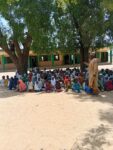
It had only one teacher with approximately 185 children forced to learn under a tree due to a total lack of classroom infrastructure.
Mustapha Shehu added that the Implementation of the “ECCDE recommended arrangement,” featuring six children per table in a circular seating arrangement is designed to foster a stronger emotional and instructional connection between the teacher and the students.
Despite these efforts, the field visit identified specific academic areas requiring urgent attention.
The findings emphasize that while infrastructure is a critical first step, sustained teacher training and the provision of localized learning aids are essential to ensure that children do not just occupy a classroom, but actually master the curriculum.
A consultant with UNICEF in his presentation Dr Jacob Sunday took participants through an elaborate presentation on Nigeria currently faces a staggering crisis with 18.3 million out-of-school children (OOSC) the highest number globally.
This challenge cuts across Jigawa, Kano, and Katsina states, which together account for approximately 30% of the nation’s OOSC.
New data suggests the solution isn’t just building more primary schools, but reaching children much earlier through Early Childhood Care, Development & Education (ECCDE).
The crisis often begins before a child even steps into a classroom.
Research shows that 90% of brain development occurs before age five.
Without a foundation in pre-primary education (ages 3–5), children enter Primary 1 unprepared.
Children without ECCDE are twice as likely to drop out by Primary 3.
Enrollment remains critically low across the three states:
Jigawa: 25% Gross Enrollment Ratio
Kano: 35% Gross Enrollment Ratio
Katsina: 28% Gross Enrollment Ratio
A look at the numbers reveals a system under immense pressure.
While the National Educational Research and Development Council (NERDC) mandates one year of pre-primary education, the facilities are struggling,
Overcrowding: In Kano, the average ECCDE class has 363 children, far exceeding the recommended ratio of 25 per teacher.
Jigawa and Katsina currently have no specific budget line for ECCDE, leaving the sector reliant on UBEC grants and international partners like UNICEF.
Most schools lack separate toilets for boys and girls and safe, age-appropriate playgrounds, which are vital for holistic development.
READ AlSO:UNICEF Calls for Recruitment of Qualified and Competent Teachers in Schools
In the Northwest, fathers are the primary decision-makers, yet fewer than 15% currently attend ECCDE meetings.
Evidence shows that when fathers are engaged, a child’s risk of dropping out falls by 50%.
Mobilizing “Male Champions” and utilizing Friday mosque messaging are seen as critical strategies to shift cultural norms and normalize early enrolment for both boys and girls.
However Jigawa state is integrating Tsangaya (Almajiri) schools with ECCDE classes to keep children in the formal system.
While Kano state is Utilizing volunteer mothers and low-cost, community-based materials.
And in Katsina state Implementing UNICEF-supported “Catch-up” programs for 5-year-olds to prepare them for Primary 1.
Quality ECCDE in the rural Northwest costs roughly ₦45,000 per child per year.
However, the return on investment is massive: for every ₦1 spent, the society gains between ₦7 and ₦13 in long-term GDP growth and reduced costs for security and social services.
Read also: THIRD QUARTER REVIEW MEETING AHBN UPHOLDS PARTNERSHIP ENGAGEMENTS IN ROUTINE IMMUNIZATION
As Ring-fencing Funds in allocating at least 5% of state UBE funds specifically for ECCDE.
Double panel of discussion was organised for Government officials and Civil society organisations on the way forward regarding to the development of ECCDE in North western Nigeria.


