



The International Organization for Migration (IOM) recently marked 25 years of operations in Nigeria, celebrating a quarter-century partnership that has supported millions of people, strengthened national institutions, and helped communities rebuild their lives.
In a special video message for the milestone, Vice President Kashim Shettima congratulated IOM and commended its critical role in supporting displaced communities, protecting vulnerable populations and advancing safe and regular migration.
Read also: FLAG – OFF: KANO 7.8 MILLION CHILDREN TO RECEIVE MEASLES-RUBELLA VACCINES
He emphasized that migration should be viewed not just as a challenge to manage, but as a vital opportunity to harness through skills development, safe mobility pathways, youth empowerment and robust diaspora engagement.
The anniversary event in Abuja brought together high-ranking officials and stakeholders, including Borno State Governor Professor Babagana Umara Zulum and Minister of Humanitarian Affairs and Poverty Reduction Dr. Bernard Mohammed Doro, alongside members of the diplomatic corps and international partners.
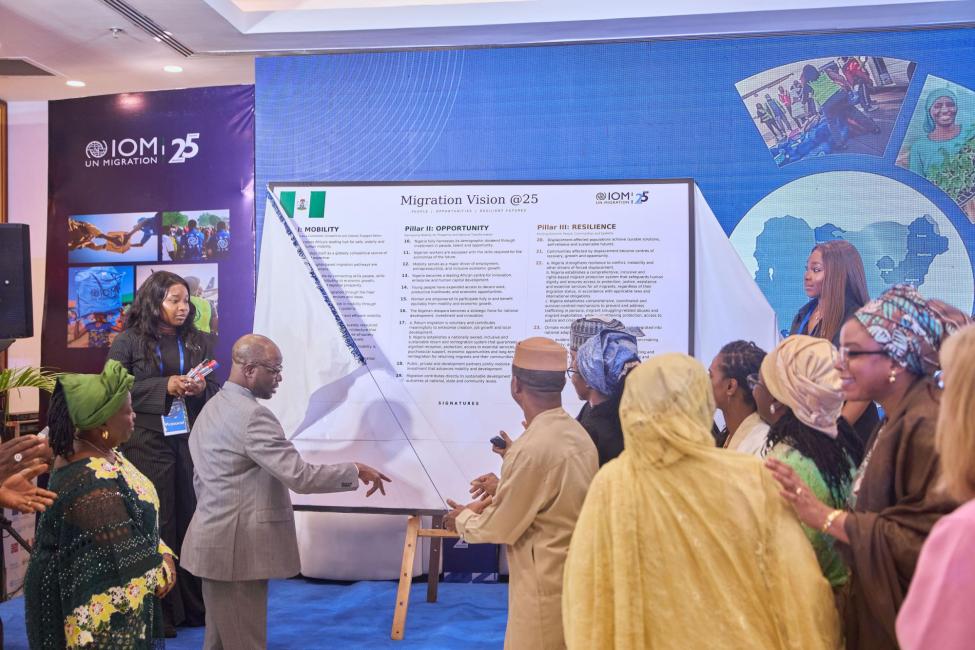
A central highlight of the gathering was the unveiling of Migration Vision @25, a framework developed in collaboration with the Nigerian government to guide migration cooperation and priorities over the next 25 years.
Anchored around the three pillars of Mobility, Opportunity, and Resilience, the vision positions Nigeria as a leading African hub for safe and productive migration, a globally competitive source of talent, and a country where migration directly drives economic development.
Read also: Nigerian Cancer society Appeal for Increase of fund in 2025 budget
Over the past decade and a half, IOM’s impact in Nigeria has been extensive.
Since 2014, the organization has delivered humanitarian assistance to over 2.5 million people, provided shelter to nearly 500,000 displaced individuals, ensured safe drinking water access for more than 737,000 people, and facilitated the voluntary return home of over 72,000 Nigerian migrants.
Beyond immediate relief, IOM-supported economic recovery initiatives have generated or restored more than 75,000 jobs, strengthened over 2,150 small businesses, and trained upwards of 12,700 individuals in market-relevant skills.
Furthermore, the organization has aided six major national migration policies and reinforced border management systems across 33 locations nationwide.
Reflecting on the organizations growth from a small two-person office in Lagos
Read also: Deaths by air pollution more than those of malaria, HIV combined — Minister
25 years ago to a nationwide presence today, IOM Chief of Mission Sharon Dimanche underscored that the true measure of success lies in the lives touched and the resilience of the Nigerian people.
Regional Director for West and Central Africa Sylvia Ekra also reiterated IOM’s steadfast dedication to fostering an environment where human mobility opens doors to prosperity and leaves no one behind.


